Setting up your Ram for towing: hitch, brakes, mirrors and limits
A practical towing setup checklist for Ram 1500 and HD trucks: reading your ratings, hitch and wiring, brake controllers, mirrors and cooling.
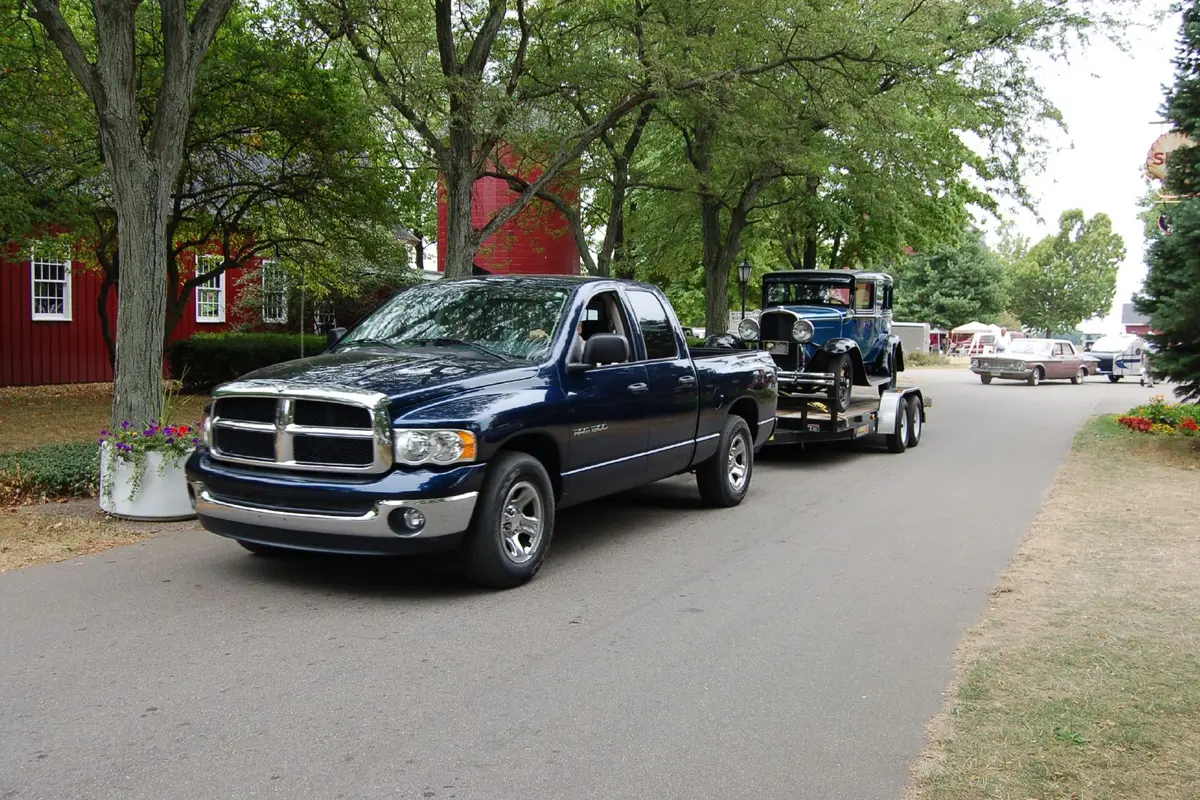
Ram trucks are built to tow. But a safe, stress-free towing setup takes more than a ball mount in the receiver. Here’s the checklist we walk through with customers before their first big trailer.
1. Know your real limits
The brochure towing number is for a specific configuration. Your limits are on your truck:
- Payload: on the tire and loading information label in the driver’s door jamb. This is how much weight you can add, including passengers, cargo and trailer tongue weight.
- GVWR (gross vehicle weight rating) and GCWR (gross combined weight rating): on the door-jamb label and in the towing guide for your model year.
- Rear axle ratio and engine change the tow rating significantly. Your build sheet or VIN tells us both.
Rule of thumb: tongue weight should be about 10–15% of trailer weight for conventional trailers. Payload often runs out before the tow rating does.
2. Hitch and ball
- Use the right receiver class for the load, and make sure the ball mount and ball are rated for it.
- Match ball size to the coupler, and set the ball height so the trailer rides level.
- For heavy conventional trailers, a weight-distribution hitch restores front-axle load and improves steering and braking. Check whether your truck has rear air suspension, because some setups need a different procedure.
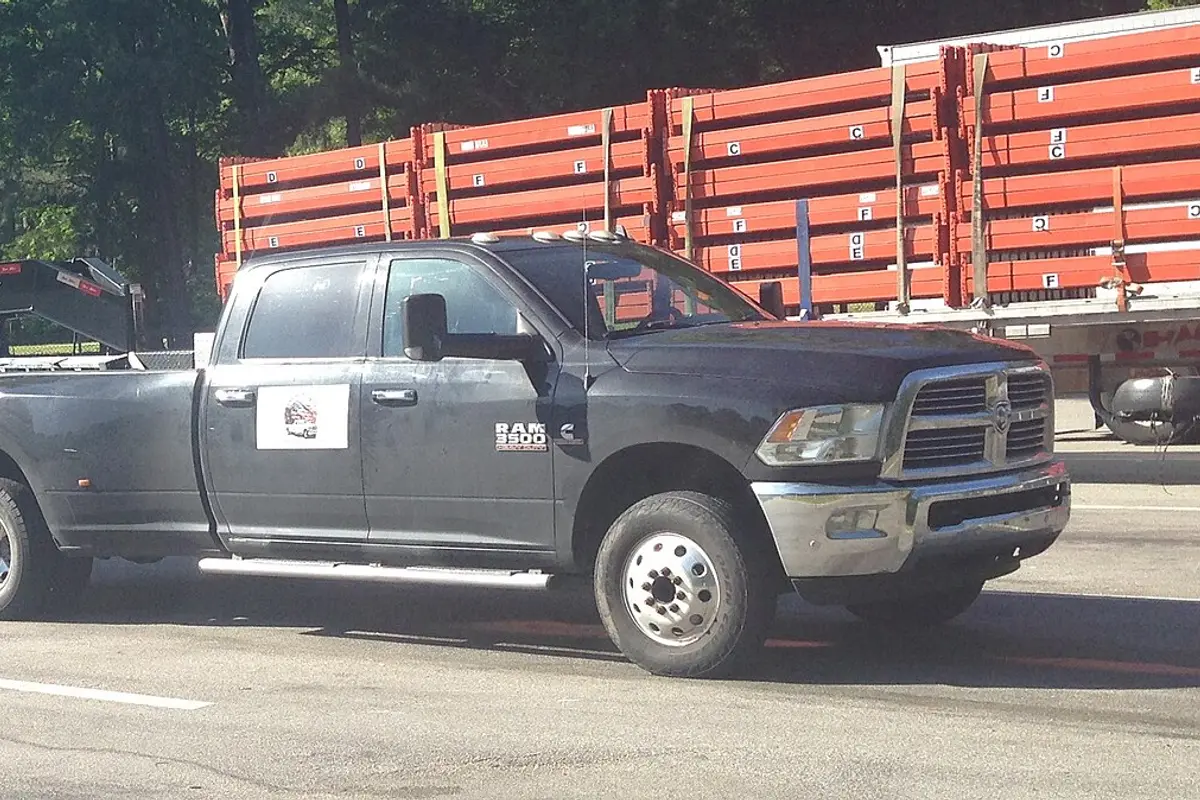
- Ram HD trucks with gooseneck/5th-wheel prep have in-bed hitch provisions. Use rated hardware.
3. Wiring and brakes
- Wiring: most trucks have a 7-pin connector and a 4-pin flat. Test every function (running lights, brake lights, turn signals, reverse and trailer brake output) before every trip.
- Trailer brakes: many Ram trucks offer an integrated trailer brake controller. Set the gain with the loaded trailer on a dry road, so the trailer brakes firmly without locking up.
- Breakaway: connect the breakaway cable to the truck, not the hitch ball, and cross the safety chains under the coupler.
4. Mirrors and visibility
If the trailer is wider than your truck, you need towing mirrors. Ram offers power-folding and telescoping trailer-tow mirrors on many trucks. Replacing damaged mirror glass or a full mirror assembly is common after a season of towing. See our mirror replacement guide.
5. Cooling and transmission
Towing heats everything:
- Keep the cooling system in top shape. See our overheating guide.
- Use tow/haul mode. It changes shift points and adds engine braking.
- Service the transmission on the severe-service schedule. Here are the guides to the 8-speed and the RFE automatics.
- On diesels, watch exhaust and transmission temperatures on long grades.
6. Tires and brakes
Set tire pressures for the load (see the door-jamb label and your tire’s maximum pressure), check trailer tire age and pressure, and inspect the truck’s brakes and fluid. See brake fluid basics.
7. Before every trip
Walk around the rig: coupler latched and pinned, chains crossed, breakaway connected, lights checked, tires inflated, load secured and balanced. Stop after the first few miles to re-check.
If you need hitch-related wiring parts, mirrors or cooling parts, send us your VIN and we’ll match them to your truck. Heavy-duty owners should also read our death wobble guide.