5.7 vs 6.4 (392) vs 6.2 Hellcat: HEMI engines compared
The modern HEMI family explained: power, where each engine was used, what makes them different and what that means for parts and upkeep.
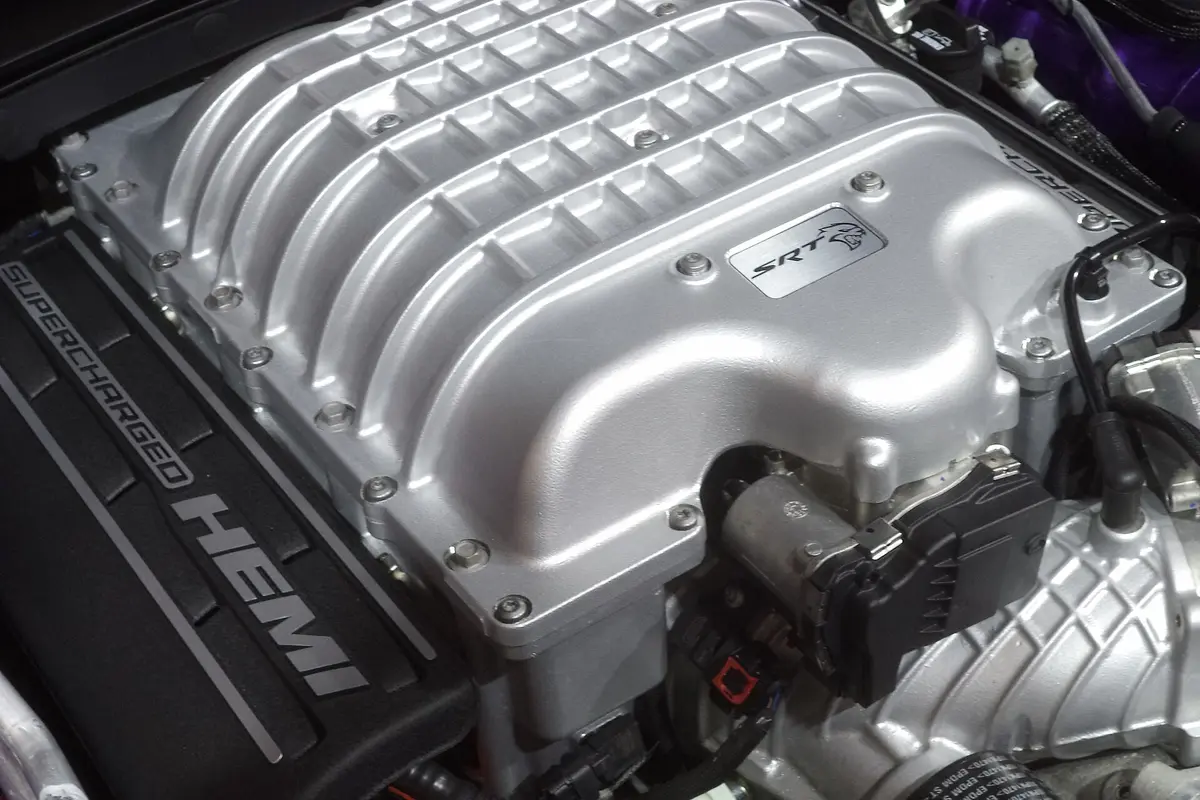
Chrysler revived the HEMI name for the 2003 Ram, and the modern HEMI V8 has since powered almost everything with a V8 in the Dodge, Chrysler, Jeep and Ram lineup. Three engines make up most of the family you’ll meet today: the 5.7, the 6.4 (392) and the supercharged 6.2. They look alike under a plastic cover, but they’re built for different jobs.
At a glance
| 5.7 HEMI | 6.4 HEMI (392) | 6.2 supercharged HEMI | |
|---|---|---|---|
| Introduced | 2003 (Ram) | 2011 (SRT8 cars) | 2015 (Hellcat) |
| Aspiration | Naturally aspirated | Naturally aspirated | Supercharged (twin-screw) |
| Typical car output | About 370–375 hp (R/T) | About 470–485 hp | 707 hp and up |
| Where you’ll find it | Charger/Challenger R/T, 300C, Durango, Ram 1500, Grand Cherokee | Scat Pack, SRT 392, Durango SRT, Ram HD, Wrangler 392 | Hellcat, Redeye, Demon, Trackhawk, TRX, Durango SRT Hellcat |
Exact ratings vary by model and year. The 6.1 HEMI (2005–2010 SRT8 models) sits between the 5.7 and the 6.4 in this family tree.
The 5.7: the workhorse
The 5.7 is the most common HEMI by far. From 2009, the updated “Eagle” 5.7 added variable cam timing (VVT) and, in many applications, the Multi-Displacement System (MDS), which shuts off four cylinders under light load to save fuel.
Ownership notes:
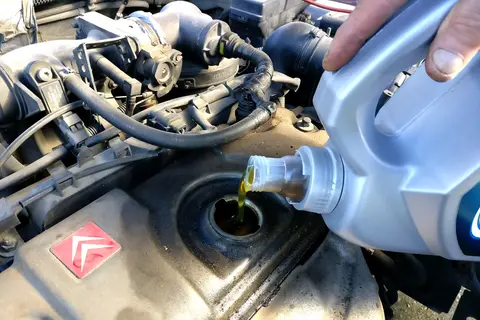
- Use the specified oil grade. VVT and MDS are sensitive to viscosity. See the HEMI oil guide.
- The well-known “HEMI tick” can be harmless or serious. Learn to tell them apart in our HEMI tick guide.
- Truck 5.7s are tuned for torque and towing. Car 5.7s rev a little more freely.
The 6.4 (392): big displacement, no boost
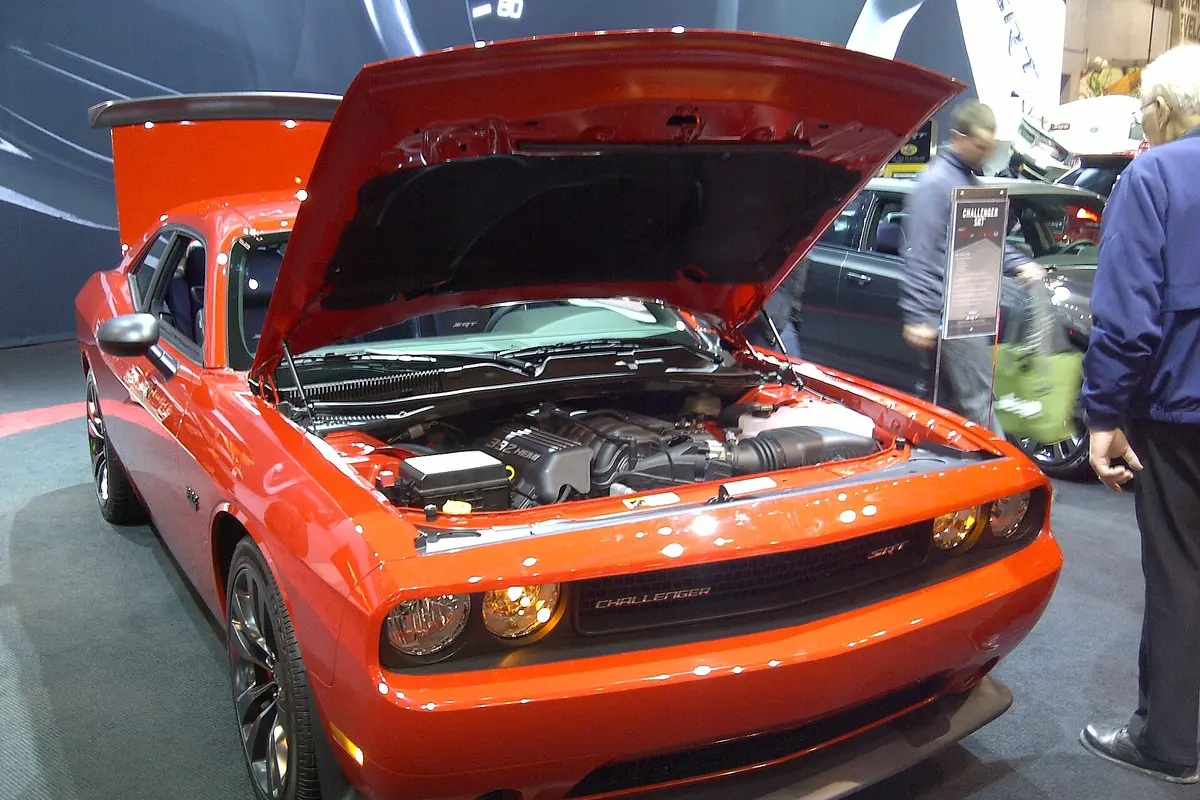
The 392 cubic-inch HEMI brought SRT-level power without a supercharger. It has a larger bore and stroke than the 5.7, a more aggressive tune and, in cars, an active intake and exhaust.
- Requires 0W-40 full synthetic in most applications
- Heavier-duty cooling and oil systems in SRT cars
- In Ram heavy-duty trucks, a 6.4 is tuned for durability and towing rather than peak horsepower
The 6.2 supercharged: the Hellcat family
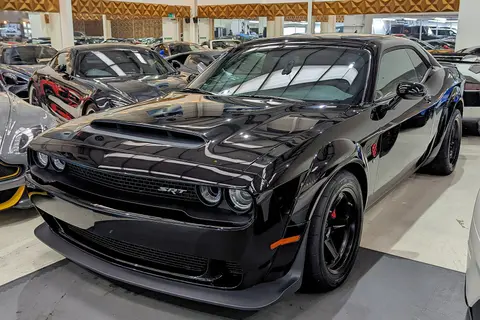
The Hellcat engine is not just a 6.4 with a blower. It has a forged crankshaft, forged pistons, a strengthened block and a twin-screw supercharger with integrated charge-air coolers. Variants include the Redeye, Demon and Super Stock tunes, and the version in the Jeep Grand Cherokee Trackhawk, Ram 1500 TRX and Durango SRT Hellcat.
Ownership notes:
- Two cooling circuits: the engine circuit plus a low-temperature circuit for the charge coolers. Both need maintenance. See our coolant guide.
- Supercharger belt, tensioner and idler wear faster than on naturally aspirated engines.
- Spark plugs work harder under boost, so expect shorter inspection intervals. See why your HEMI has 16 spark plugs.
What’s shared, what isn’t
All three share the pushrod V8 layout, two plugs per cylinder and many sensor designs. But camshafts, pistons, heads, intake systems, oil pumps and fuel systems differ between them, and often between model years of the same engine. Never assume a “HEMI part” fits all HEMIs. Match the Mopar part number or send us your VIN.
Which is right for you?
- Daily driver and tow vehicle: the 5.7 is affordable to own and parts are everywhere.
- Best value performance: the 392 delivers most of the fun with simpler maintenance than a supercharged car.
- Maximum performance: the Hellcat family, if you’re ready for the running costs. Our Hellcat, Redeye and Demon guide explains the differences, and the Trackhawk guide covers the Jeep version.
Thinking about bolt-ons for any of them? Read what really adds power first.