Death wobble in Ram 2500/3500: track bar, damper and ball joints
A violent front-end shake after a bump on a solid-axle Ram HD is called death wobble. Here's what causes it, how to find the worn part and how to fix it.
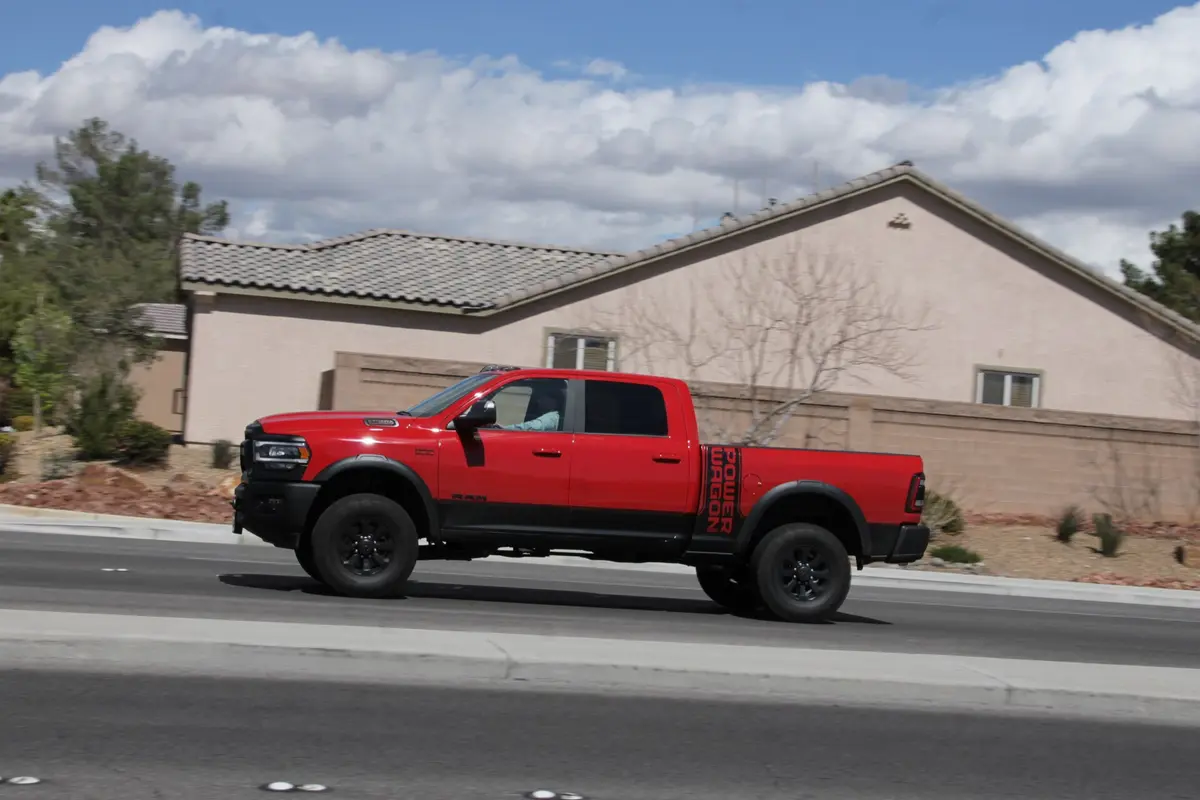
If you’ve felt it, you know. You hit an expansion joint or pothole at highway speed, and the front of your Ram heavy-duty truck starts shaking so violently the steering wheel is hard to hold. It stops only when you slow down. Owners call it death wobble, and it’s common to solid-front-axle trucks and Jeeps.
Why solid axles do this
Ram 2500 and 3500 4x4 trucks (and some 2WD versions) use a solid front axle located by control arms and a track bar, and steered by a linkage with a steering damper. When something in that system has play, a bump can start the axle oscillating side to side at its natural frequency. The steering and tires feed the oscillation, and it builds until speed drops.
Jeep Wranglers suffer from it too. See our Wrangler JK vs JL guide. Death wobble is a symptom of wear or looseness, not a design defect you have to live with. Find the loose part and it goes away.
The usual suspects, in order
- Track bar and its bushings or ball joint. The track bar keeps the axle centered under the truck. Wear at either end, a worn bushing, or loose mounting bolts are the most common cause by far.
- Track bar bracket bolts. Even a slightly loose bolt can elongate the holes in the frame-side bracket.
- Tie-rod ends and drag link. Worn steering linkage joints add play.
- Ball joints. Heavy diesel engines, big tires and plowing wear them faster.
- Wheel bearings and hub assemblies.
- Tires: out-of-balance, out-of-round or mismatched tires can trigger wobble on an otherwise marginal front end.
A worn steering damper doesn’t cause death wobble, but a good damper can hide it. That’s why “I put on a new damper and it went away for a while” is a common story. Fix the root cause.
The dry-steer test
You can find most loose parts with two people:
- Park on a dry surface with the engine running so power steering works.
- Have a helper rock the steering wheel back and forth quickly, about a quarter turn each way.
- Watch and feel each joint: both ends of the track bar, the tie-rod ends, the drag link and the steering box mount.
Any joint where one side moves and the other side lags behind has play. Also check the track bar bolts’ torque against the specification.
The fix
- Replace worn track bars or their bushings or ball joints, and torque the mounting bolts to spec (with the truck at ride height where the procedure calls for it).
- Replace worn tie-rod ends, drag links or ball joints.
- Align the truck afterward. Caster especially affects stability.
- Balance and inspect the tires.
- Re-check track bar bolt torque after a few hundred miles.
Lifted trucks
Lifts change the track bar angle and caster. Many lifted trucks need an adjustable track bar, a drop bracket or caster correction to stay stable. Lift kits are a big contributor to wobble when they’re installed without these corrections.
Is it safe to drive?
Death wobble is frightening and can cause loss of control. If it happens, slow down smoothly, don’t slam the brakes, and get the front end inspected before driving at highway speed again.
Need parts? Send us your VIN. We’ll match the track bar, linkage and ball joints to your exact axle and model year. For general Ram HD upkeep, see the Cummins maintenance guide.