Why your HEMI has 16 spark plugs (and when to change them)
The modern HEMI fires two spark plugs per cylinder. Why Chrysler did it, how often to replace them and how to avoid the classic mistakes.
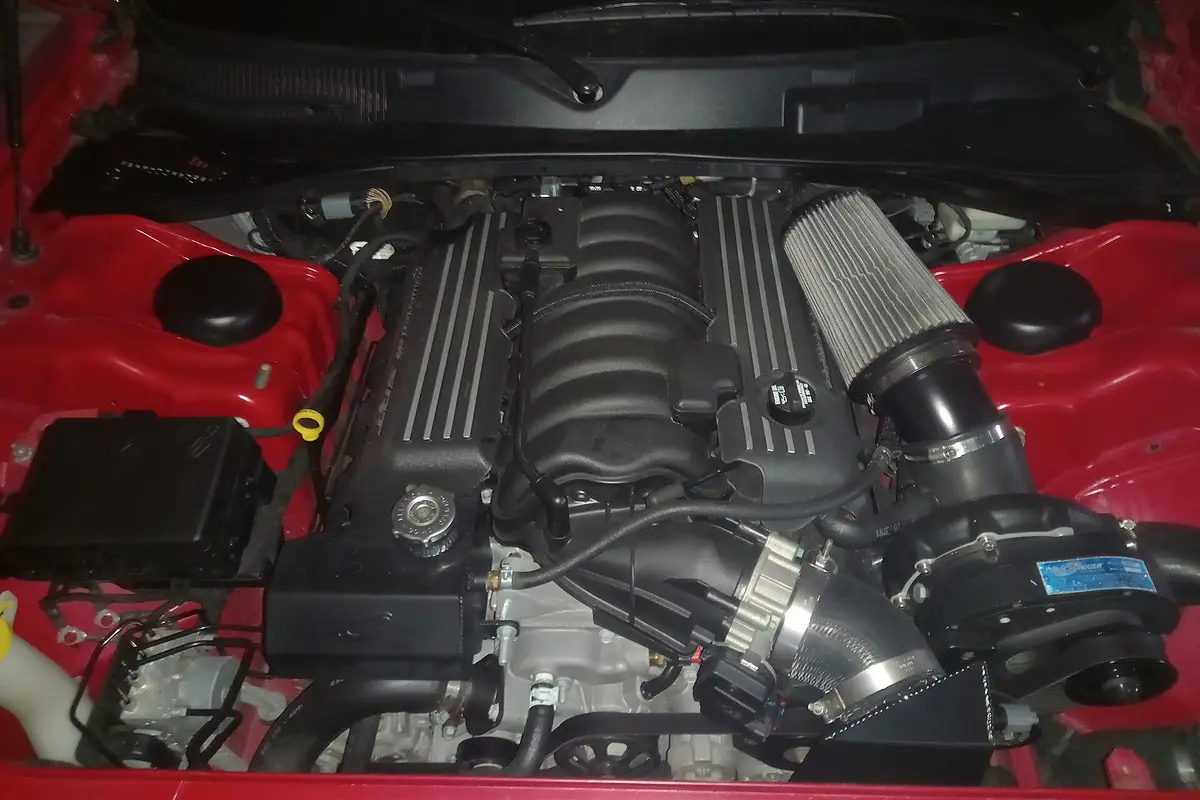
Pull a coil off a modern HEMI and you’ll find a spark plug underneath, and another one hiding on the other side of the cylinder head. Every 5.7, 6.1, 6.4 and 6.2 HEMI has two spark plugs per cylinder, sixteen in total. That surprises a lot of owners at their first tune-up.
Why two plugs?
The HEMI’s hemispherical combustion chamber is large and open. One plug in the middle of a big chamber leaves a long flame path. Two plugs, fired close together, start two flame fronts, which:
- burns the mixture faster and more completely,
- reduces the tendency to knock, allowing more spark advance,
- lowers emissions and helps fuel economy.
On many HEMIs, one plug per cylinder sits under a coil-on-plug unit and the other is fired through a plug wire from the coil on the opposite cylinder, so each coil does double duty.
How often should they be changed?
This varies by engine and year, so check the maintenance schedule for your vehicle:
| Engine family | What schedules typically call for |
|---|---|
| Early 5.7 HEMI (2003–2008) | Shorter intervals, often around 30,000 miles, on the original copper plugs |
| 5.7 “Eagle” (2009+), 6.4 | Long-life iridium plugs, typically up to about 100,000 miles |
| 6.2 supercharged | Shorter intervals on many schedules. Supercharged engines are harder on plugs. |
If your engine has been tuned, has boost added, or sees track time, inspect plugs well before the published interval.
Signs you’re overdue
- Rough idle or a misfire code (P0300–P0308)
- Hesitation under load, especially when towing
- Worse fuel economy
- A flashing check-engine light. Stop driving hard: a flashing light means a misfire severe enough to damage the catalytic converter.
DIY tips
- Work on a cold engine. Aluminum heads and steel plug threads don’t mix well when hot.
- Change them in pairs per cylinder and keep track. Do one cylinder at a time so you never mix up coils and wires.
- Use the correct plug. HEMI plugs have a specific heat range and reach. The wrong reach can hit a valve or leave threads exposed to carbon.
- Check the gap, but be gentle. Most iridium plugs come pre-gapped. Don’t pry on the fine center electrode.
- Torque to spec. Use a torque wrench, not feel. Over-tightening can damage threads in the aluminum head.
- Inspect the wires and boots. On engines with plug wires, a cracked boot can cause a misfire that new plugs won’t fix.
Misfire after new plugs?
Swap the coil on the misfiring cylinder with a neighbor. If the misfire moves, replace the coil. If it stays, check the plug wire, then look at mechanical causes. On high-mileage 5.7 engines, a misfire with a tick can point to a lifter or camshaft problem. Our HEMI tick guide explains how to tell.
For the rest of your HEMI’s routine service, see the HEMI oil change guide.