Charger & Challenger front-end clunk: tension struts, sway links and ball joints
A clunk over bumps or when braking is common on LX/LD/LC cars. Here are the usual suspects, how to test each one, and which parts to replace.
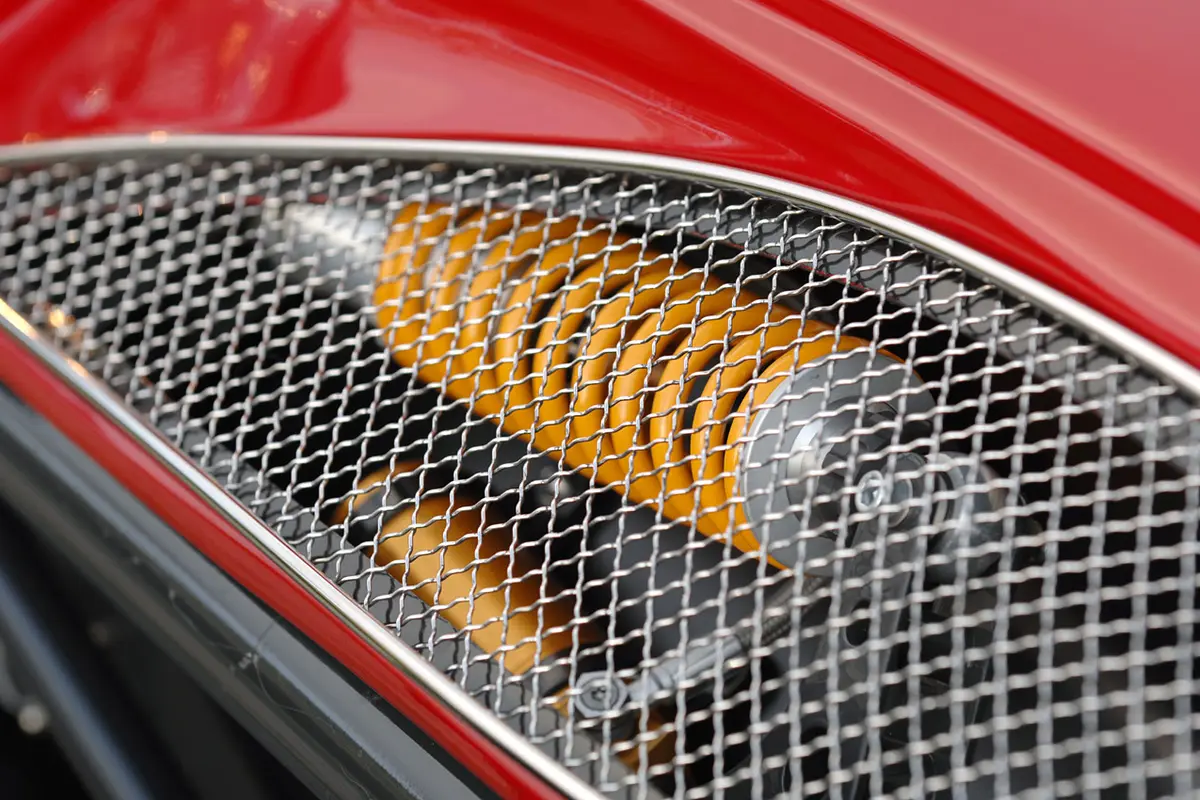
If you own a Charger, Challenger, Chrysler 300 or Magnum long enough, you’ll probably hear it: a clunk or knock from the front end over bumps, driveway lips or when braking. The front suspension on these cars is robust, but it has several rubber-bushed and ball-jointed links that wear with mileage.
How the front suspension is laid out
The LX/LD/LC cars use a short-long-arm style front suspension with a lower control arm, a forward-mounted tension strut (sometimes called a compression arm or radius rod), an upper control arm, a strut or shock with coil spring, and a sway bar connected by links. Each joint is a potential noise source.
Suspect 1: tension struts
The tension strut runs from the lower knuckle forward to the frame. Its large rubber bushing takes braking and acceleration forces, and it’s a very common wear item. Signs:
- Clunk when braking or when moving from Reverse to Drive
- Shimmy or vibration under braking that isn’t caused by warped rotors
- Cracked, torn or oil-soaked bushing rubber
Suspect 2: sway bar links
Worn sway bar links make a rattle or knock over small, uneven bumps at low speed. Check them by grabbing the link with the car on the ground and twisting. There should be no play. They’re inexpensive and quick to replace.
Suspect 3: ball joints and control arms
Lower and upper control arms carry ball joints, and on many applications the joint is part of the arm. Worn joints cause:
- A clunk over larger bumps
- Wandering or vague steering
- Uneven inner or outer tire wear
To check, lift the car so the wheel hangs and pry gently on the tire at top and bottom. Have a helper watch the joints for movement.
Suspect 4: strut mounts and the strut itself
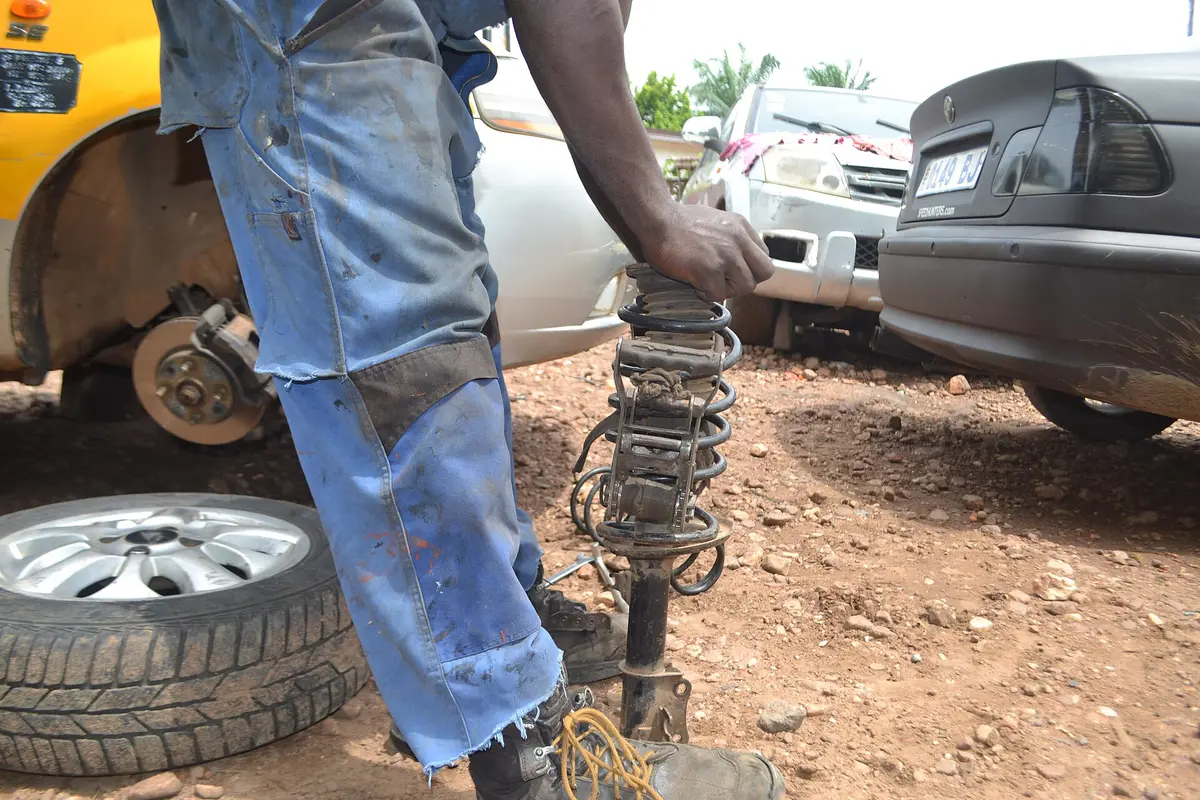
A worn upper strut mount clunks over bumps and sometimes makes a creak when turning the wheel while parked. A leaking shock or strut won’t usually clunk, but it makes the car float and bounce.
Also check: AWD front half shafts and inner tie rods
AWD cars add front half shafts, whose inner joints can clunk on throttle changes. Worn inner tie rods can knock when turning. See the CV axle diagnosis guide.
Doing the job right
- Torque bushings at ride height. Rubber-bushed arms tightened with the suspension hanging will twist the bushing at ride height and fail early. Load the suspension (car on ramps or a jack under the knuckle) before final torque.
- Replace in pairs for consistent handling, especially tension struts and sway links.
- Get an alignment after replacing control arms, tension struts or tie rods.
Ordering the right part
Front suspension parts on these cars vary by RWD vs AWD, standard vs SRT/performance suspension, and model year. Some parts also differ between the Challenger and the Charger/300. Add your car to My Garage to see fit badges, or send us your VIN. For more on what swaps between models, read which LX parts interchange.