Pentastar 3.6 oil filter housing leak: symptoms and the fix
The 3.6 Pentastar's oil filter housing and cooler are a well-known leak point. How to recognize it, why it happens and how the repair is done.
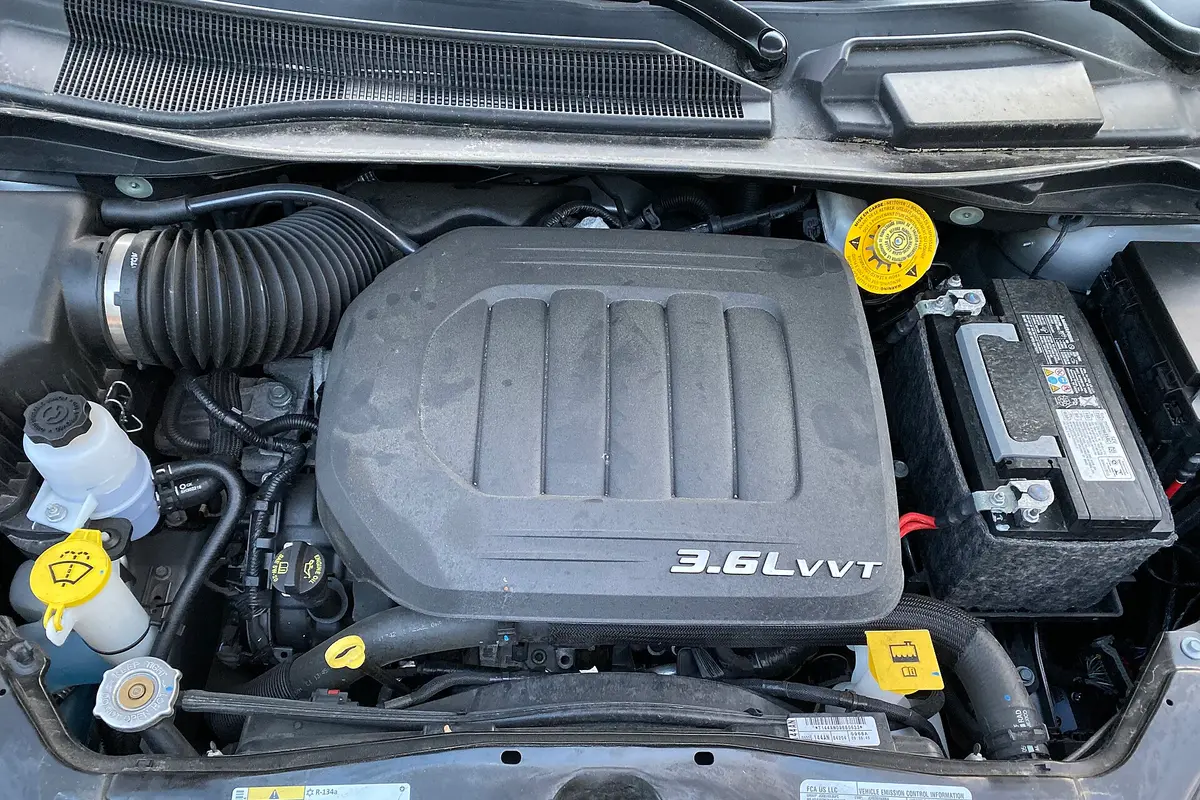
The 3.6-liter Pentastar V6 arrived for the 2011 model year and went on to power nearly every Chrysler, Dodge, Jeep and Ram product: Grand Caravan, Journey, Charger, Challenger, Durango, Ram 1500, Wrangler and Grand Cherokee, among others. Our Grand Caravan and Journey guides cover the other common repairs on those vehicles. It’s a good engine with one very well-known weak point: the oil filter housing.
What the part does
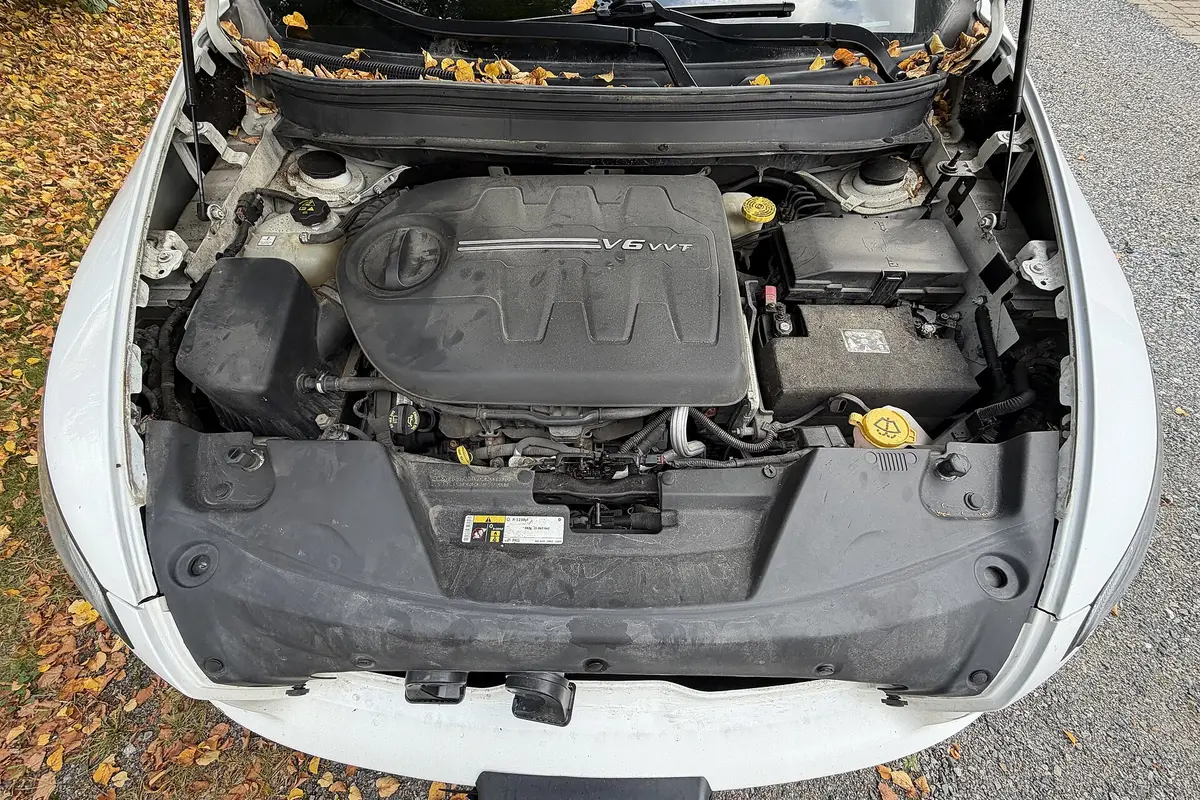
On the Pentastar, the oil filter housing sits in the valley between the cylinder heads, under the upper intake manifold. It holds the cartridge oil filter, and it also contains an oil cooler, a small heat exchanger that uses engine coolant to control oil temperature. So a single assembly carries both oil and coolant.
Why it leaks
Earlier housings were made of plastic. After years of heat cycles, the plastic housing can crack or warp, and the gaskets between the housing and the block harden. Depending on which seal fails, you get:
- External oil leaks, which run down the back of the engine onto the transmission bell housing, or
- Coolant leaks, which can appear as slow coolant loss with no obvious puddle, or
- In rarer cases, oil and coolant crossing over inside the cooler.
Symptoms
- Oil dripping at the back of the engine, often mistaken for a rear main seal leak
- Burning-oil smell after driving
- Coolant level dropping slowly
- Oil low on the dipstick between changes
- A light, milky residue in the coolant reservoir (cross-contamination)
How the repair is done
The housing is under the upper intake, so the job is mostly about access:
- Relieve fuel pressure and disconnect the battery.
- Remove the engine cover and upper intake manifold (plenum).
- Drain some coolant and remove the oil filter.
- Unbolt the oil filter housing and clean the mating surfaces carefully.
- Install the new housing with new gaskets, torqued to spec in sequence.
- Reinstall the upper intake with new intake gaskets. Don’t reuse them.
- Refill coolant, bleed the system and change the oil if there was any cross-contamination.
Many shops recommend an updated housing, including aluminum designs, over a like-for-like plastic part. Ask us which housing your engine uses. The part number depends on engine and model year.
While the intake is off
Since you’ve done most of the labor, consider:
- Upper intake manifold gaskets, always replaced
- Spark plugs on the rear bank, which are much easier to reach with the plenum removed
- The thermostat housing if it’s original and the vehicle has high miles, since it’s another common Pentastar coolant leak
Is it safe to drive with a leak?
A small external oil seep isn’t an emergency, but coolant loss or cross-contamination is. Oil that drips onto a hot exhaust can smoke and, in the worst case, catch fire. Monitor fluid levels and repair it soon.
Running hot as well? Our overheating diagnosis guide walks through the cooling system step by step. Need parts? Send us your VIN and we’ll confirm the housing and gasket set for your engine.